Showing posts with label questions. Show all posts

Tuesday, June 12, 2018

Question: What is 生レーモンサワー Lemon Sour in Japan?

This is not so a review as it is a description and introduction to what this drink is! (It is one of my favourite drinks!)

Fresh Lemon Sour 生レーモンサワー

This drink is unique to Japan... not only is "Sour" a drink I have only heard of in Japan but the fact that you can squeeze your own lemon juice (fresh) and make your own mix :D makes it unique!

What is a Japanese Sour?

Sour: also known as Chuhai (チュウハイ) is Shochu 焼酎 mixed with soda water and a "sour" tasting juice (e.g. lemon, grapefruit, plum...)

What is Shochu?

according to Wikipedia:

a Japanese distilled beverage less than 45% alcohol by volume. It is typically distilled from rice (kome), barley(mugi), sweet potatoes (satsuma-imo), buckwheat (soba), or brown sugar (kokutō), though it is sometimes produced from other ingredients such as chestnut, sesame seeds, potatoes or even carrots.

Fresh Lemon Sour 生レーモンサワー

now that's fresh!

how to order:

most izakaya will have this. To order this make sure you look for the "" (fresh) Kanji. The full name is 生レーモンサワー (fresh Lemon Sour). If there is no "生" (fresh), you won't be able to squeeze your own lemon juice.


also... if you are interested, please check out my personal blog and follow me around Tokyo :)

Tuesday, June 24, 2014

Question: Do I need Toner?

Question: Do I need Toner? Simple Moment Blog
photo source: thebodyshop.ca

To answer the question, YES! But you really need the right product.

We have all heard it, cleanser, toner, serum, moisturizer and gel... all the other steps seem to make sense like cleansers... clean; serums provide your skin with extra nutrients and moisturizers help maintain moisture and hydrate your skin; gels protect your skin from environmental factors that can harm your skin. But what exactly does toner do for your skin? We hear about it "toning" our skin, cleansing our skin and shrink the appearance of pores.


Question: Do I need Toner? Simple Moment Blog

I have been confused with toners... in fact, I recall the first time I bought some toner, when I put it on my face, I started getting weird red bumps and discovered (after using the toner for 3-4 days) that the condition of my skin had gotten a lot worse... my skin started getting really sensitive, red, itchy, etc. It just wasn't doing my skin any good.

I stopped using toner for a few years after that horrible experience. Lately, I started to use toners again. After doing research, I discovered that the "type" of toner you use is very crucial as to what type of toner you use.

*Please keep in mind that Japanese products refer to "Toners" as Lotion


Question: Do I need Toner? Simple Moment Blog
photo credits: Sasa.com


Importance of Toner:

The Number 1 thing that toners should be doing is to help balance your skin. This is really important (more important than it sounds) when we wash our face, the pH balance will shift, this can cause our face to break out or be too dry.

and depending on WHICH toner you get, there will be a different combination of benefits:

  • moisturize
  • prepare your skin to absorb serums
  • clean off make up
Question: Do I need Toner? Simple Moment Blog
example of acidic base emulsion set: photo credits: TheFaceShop


Another type of Toner:

Keep in mind that there are some Toner and Moisturizer/serum packs which let's the toner shift your pH to be more acidic so that you can absorb the more alkalized moisturizer/serum easily because you skin is acidic it will absorb to alkaline product easier. (acidic and alkaline are opposites)

If you choose these, make sure you buy them both or your skin's pH levels will not be balanced properly.

Ways to apply toner:
depending of the types of toner there are different ways you can apply it on your face.
1. drenching a piece of cotton and apply it all over face till there is none left
2. spray it on your face- these are very convenient
3. drenching a clean piece of facial paper mask with toner and put on your face for a few minutes
4. Just put a few drops on the palms of your hands and pat on your face till all has been absorbs


Thursday, May 15, 2014

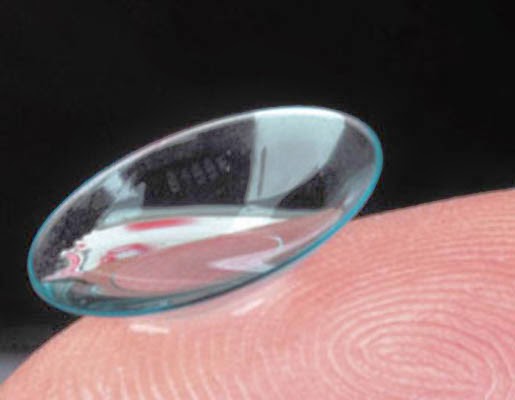
Question: Should I Reuse Daily Disposable Contact Lenses?

Quick Answer: NO!


photo source: theathleticscholarship.blogspot.com


I know there are many articles out there which claim you can and should... but that is not true. I was always tempted to try using my dailies for more than one day, so I did some research and asked around... after learning about the consequences and risks, I decided that reusing lenses is definitely not an option ... AT ALL! ... Here I want to share with you my findings and hope you will also decide not to put your eyes are risk.

Here are a few reasons why:

  • material is too thin (easy to break/tear)
  • a part of the lenses will literally dissolve if you put it in cleaning solution
  • not designed to be used for more than 1 day
  • cleaning solution cannot clean the lenses (this is due to the material of the lenses)

photo credits: www.barrhavenoptometric.com 

What happens...
If you over wear them (wearing them more than one time) there is a chance that it will stick to your Cornea, you will need professional help to get them out.

(There are even claims that it is best not to wear Dailies for more than 8 hours)

During this process (even with professional help: e.g. optometrist) your Cornea will likely tear (more accurate term is Corneal Abrasion), it will be painful to see... (I had a friend who had torn her Cornea, she said it was so painful to see), it is NOT worth it at all! It will take approximately 2-3 weeks to grow back. Think about the pain during those 2-3 weeks.

How a Corneal Abrasion (tear in Cornea feels)

  • Feeling like you have sand or grit in your eye
  • Eye pain, especially when opening or closing your eye
  • Tearing and redness
  • Sensitivity to light
  • Blurred vision or loss of vision

(source: WebMD)

Also think about if bacteria got in, you are at risk of an eye infection on top of a torn Cornea. I wouldn't let you in on the details, you can imagine how that would be like.


photo source: www.dailytech.com


Soaking in Solution will not help
You may say, well, I can wash dailies (contact lenses) with solutions and store them in solutions... that sounds logical right? WRONG! The reason why Daily Contact Lenses are so much more comfortable and a bit pricier than bi-weeklies, monthlies, etc is because they are made out of a different material and are much thinner.

Solutions you use on bi-weeklies, monthlies, etc will not only damage the lenses (removing the protection coating from the lenses) but even if you claim you are gentle enough, they cannot even clean the lenses (the comparison I would like to think of is using a white board eraser to wipe off chalk from a chalkboard... if you tried it, you know it doesn't work).

Verdict:
I know it is extremely tempting and many articles and bloggers claim it is less expensive and it is possible, but you are putting your eyes and sight at risk... is it really worth it?

After:
Alas, please read this article, I think everyone who wears Contact Lenses should read this article! I had questions (and I was afraid to ask) and this article does a great job covering most FAQs which are important to know and a little embarrassing to ask:
--> http://www.huffingtonpost.com/2013/09/26/contact-lens-hygiene-questions-answers-eye-health_n_3950593.html?utm_hp_ref=fb&src=sp&comm_ref=false


also... if you are interested, please check out my personal blog and follow me around Tokyo :)

Thursday, March 27, 2014

Differences Between Base Coat and Top Coat (Nail Polish)

photo credit: www.kaydeecosmetics.co.uk

I was talking with a friend who has just developed an interest in nail polish. However, she was concerned about the differences between Base Coats and Top Coats. I explained to her the differences and think it is a good idea to share it here, if there is anyone who might want to know.


First, you cannot use them interchangeably. They are different, they may appear to be clear but , base and top coats can come in different colours and different transparency levels too, some can even be matte.
photo source: www.drugstore.com

Base Coat:
  • makes your nails feel rough and dull
  • makes it easier to apply nail polish and design 
  • optional, but if you really want your nail polish to last longer then you should use this
base coats are more watery, very easy to smooth out. They are less smelly.

Base Coats create a protection between your nails and the nail polish.

It is meant to be used as a "base" (thus the name) you need to apply nail polish over this base coat, as a foundation.

photo source: amazon.com

Top Coat:
  • makes your nails feel shiny
  • creates a finish
  • must be used as a last step...
top coats dry faster than nail polishes and bases. They are hard and seals everything together. Some top coats have sparkles in them. (You cannot use them as a sparkle nail polish, if you want a sparkly nail polish, get a nail polish...)

elaborations:

My friend said she just used base coat on her nails and that made her cuticles all dry. That's because it is not meant to be used alone, but with other nail polishes on top.

If you just use top coat on your nails, they will peel off within 1 hour simply because there is nothing to hold it down.

If you want clear shiny looking nails, I suggest you either get a nail buffer or a "clear" nail polish. (yes, clear nail polishes are different from base/top coats... again. they SHOULD NOT BE USED AS BASE COAT OR TOP COAT.)

Happy Nail polishing!

Thursday, October 3, 2013

Question: what are Softeners, Emulsions and Essences

Who here has been confused many MANY times about emulsions, softeners and essences? are they the same thing? or how different are they? Are there any equivalents? How are they different from our normal toners, serums, moisturizers? For those who enjoy using products from Asia, you will find terms like Emulsion, Essences and Softeners, and they can certainly be quite confusing.

I have been confused quite a few times, I recall several times when I was in Asia shopping for skincare products. I felt so out of place, so in order to know what I want to look for and what I need I did some research. Let me share with you some of my findings and hopefully they will help you "decode" these terms so you can find what you are looking for when you are shopping for Cosmetics in Asia (or looking for something in an Asian brand).


(see how Softeners, Emulsions and Essences are different/similar to Toners, Moisturizers and Serums)


Softeners: Softeners are usually confused with being Toners... they look similar BUT they do different things, a softener is used to moisturize (hence the name "Softener") while a toner is to clean and balance pH (I will write a post later about Toners). The steps to using Toners and Softeners are these are --> Toners, Softeners, Moisturizers. I guess there aren't real equivalents to Softeners.

(Softeners are usually found in Asian skin care products, they can be called "moisturizing lotions" but look like toners)


photo credits: www.productreview.com.au


Emulsions: Emulsions are similar to moisturizers but they are a lot lighter. In Asia, Emulsions are translated as "milk cream" to describe it's consistency (like milk). It is also more richer at the same time. Because of the weather conditions in Asia (mostly humid), a lot of women use emulsion as a daytime moisturizer.


image source: www.barneys.com

In Asia, they are very precise with naming their products, most people confuse Emulsions with Creams, they are similar as they are both moisturizers except emulsions are lighter and creams are richer and much thicker. This is why people usually use emulsions as a daytime moisturizer and creams as a night moisturizer. (This is usually why most emulsions have UV protection, while most Creams do not). 


image source: www.barneys.com


For those who have dry to very dry skin, they have the option to use both an emulsion and cream in the same routine. This will not "ruin" or "over saturate" your skin. However, the best way is to use Emulsion then cream though as this will create a much stronger moisture boost (because of its richness).


Essences: Essence is another word for serum, they are the same thing. Like serums, essences are used after toners and before moisturizers. 


photo credits: sk-ii.com


Essence or serums are concentrated forms of nutrients that are made so that your skin will immediately absorb it when applied, this helps fix "deeper" skin problems.

I am writing a post on serums (link will be posted here when it is done)


So, keep in mind Softeners, Emulsions and Essences can be used in the same skincare routine. Please read my other blog post to see how using Emulsions (moisturizers) and Essences (serums)  together can help enhance your skin.

Thursday, August 8, 2013

Question: Difference Between Serum and Moisturizer

photo credits: Clinique.com

 I have always wondered what are the differences between serum and moisturizer.They both "seem" to do similar things, yet Serums tend to costs so much more than moisturizers. I always thought serums were a concentrated moisturizer. After starting to use more skincare products, I was determined to learn about the differences so I know what it was I was putting on my face. I have found the answers and I want to share them with you. I will try to keep this post as short and as simple as I can.

First, to make things clear, serums and moisturizers are meant to be used together. You can't "choose" which one to use. If you just use one, you aren't making use of the product to it's fullest capabilities. In fact, you will be wasting the product since you can not utilize it fully. (Although, I do not recommend those who are 24 and under to use serums since your skin is able to produce the nutrients needed already (unless you have really bad terrible skin), over nourishing your skin can cause your skin to "stop" helping itself... and the formula might be too strong for your skin and end up making the condition of your skin even worse). If you feel you need one, I recommend you to go visit the store and ask if there are serums that are more suitable for younger skin)
photo credits: lancome.com

Serums are to enhance your skin-care routine and it is much more concentrated (you should never put too much on, once you put serum on your face, your skin will immediately absorb it all, so don't "over saturate" it, not having reside on your face is good, it means your skin has absorbed it all. Serums are very different than other creams/moisturizers/lotion. This is one of the reasons why a small bottle costs so much, and you can still "afford" it, a little goes a long way...) A 50 ml Serum can last you 5-6 months. 

If you read the "types" of serums and moisturizers you will notice their differences between the two immediately.


Serums tend to focus on a really specific skin problems e.g. wrinkles, discolorations, renew skin, etc. If you notice, these are "deeper skin problem.

Moisturizers are, well, used for moisturizing. (for oily skin, to rehydrate dry skin) These are solving the more "surface" part of the skin. They are also meant to "protect" you from environmental/climate factors (e.g. air pollution, UV rays, dry weather, hot weather etc) which prevent your skin from being healthy.

photo credits: http://lacedinleather.com


Remember: Moisturizers are meant to seal nutrients and prevent moisture from evaporating while serums are the nutrients to replenish your skin. 

When you use Moisturizers and serums together, you are putting nutrients into your skin (which are penetrating the depths of your skin, and the moisturizer seals it, making sure the serum can work properly, while protecting your skin from dryness and climate factors which can affect the skin (e.g. pollution).


(I will make a post that talks about serums since I realized there are a lot of things that need to be covered)

Thursday, August 1, 2013

Question: What is the difference between Greek Yogurt and "Regular" Yogurt

image source: http://danone.ca/

 I am obsessed with Greek Yogurt, who isn't? It is always better to learn about what you are eating and I have been curious as to what are the differences between yogurt and Greek yogurt. There should be more to the differences between Greek Yogurt and regular yogurt other than it's thicker and creamier texture.

image source: http://danone.ca/


The major difference between Greek yogurt and regular yogurt is that Greek yogurt contains less: sugar, carbohydrates and twice the amount of protein. I also discovered that because it was strained a lot more than regular yogurt, it is easier to cook with, it will not curd like regular yogurt.

In this chart, I have summarized some other differences I found (the ones highlighted indicate it is "better" than the other):


Greek Yogurt
“Regular” yogurt
Protein
Twice the amount of protein then regular yogurt
 ______________________
Sodium
Half the sodium of regular yogurt

Calcium
 ___________________
Contains three times the calcium of Greek Yogurt
Calories
Almost same as regular yogurt
Almost same as Greek yogurt


So, after comparing some of the differences, which would you choose? I think Greek Yogurt offers a lot of great nutrients and you can cook with it. It is ideal for those who would want to loose some weight and for those who are diabetic (since there is less sugar). However, if you are looking to eat yogurt to get the calcium, Greek Yogurt might not be your most ideal snack.

LinkWithin